Training leading talent at the frontiers of quantum physics and computer science
-
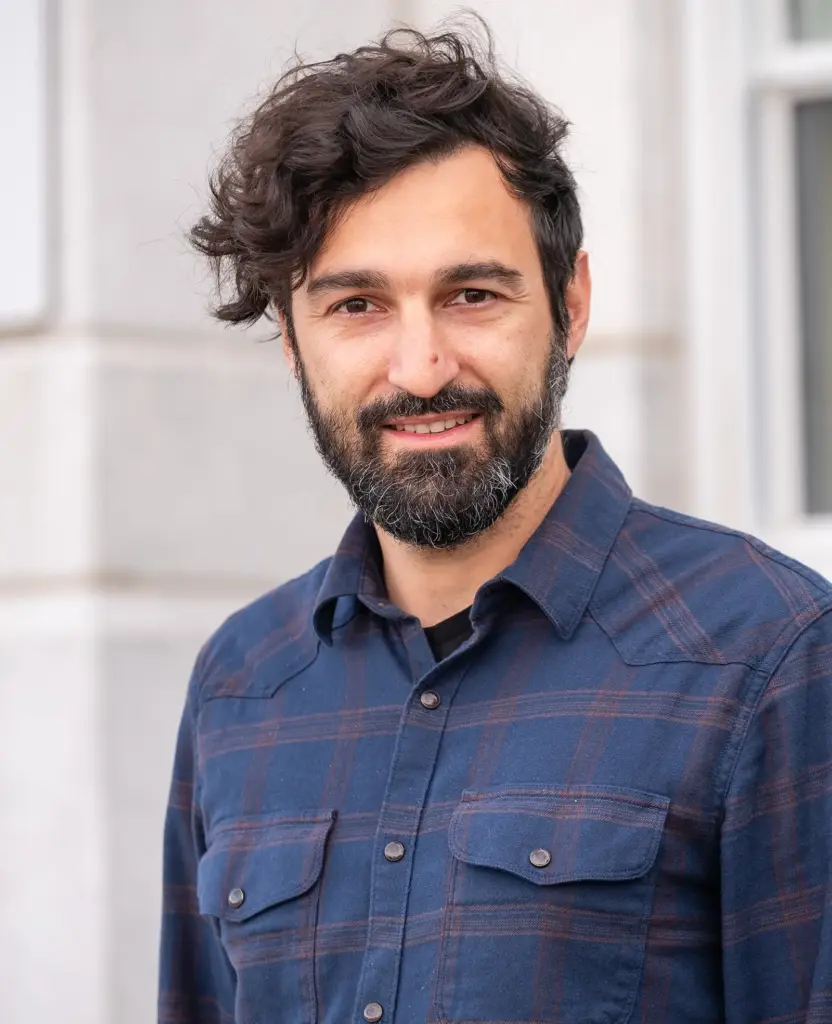
Stefanos Kourtis
Associate Professor, Quantum Institute,
Université de Sherbrooke
Lead Researcher, Non Trivial -
Victor Drouin-Touchette
Staff Researcher
-
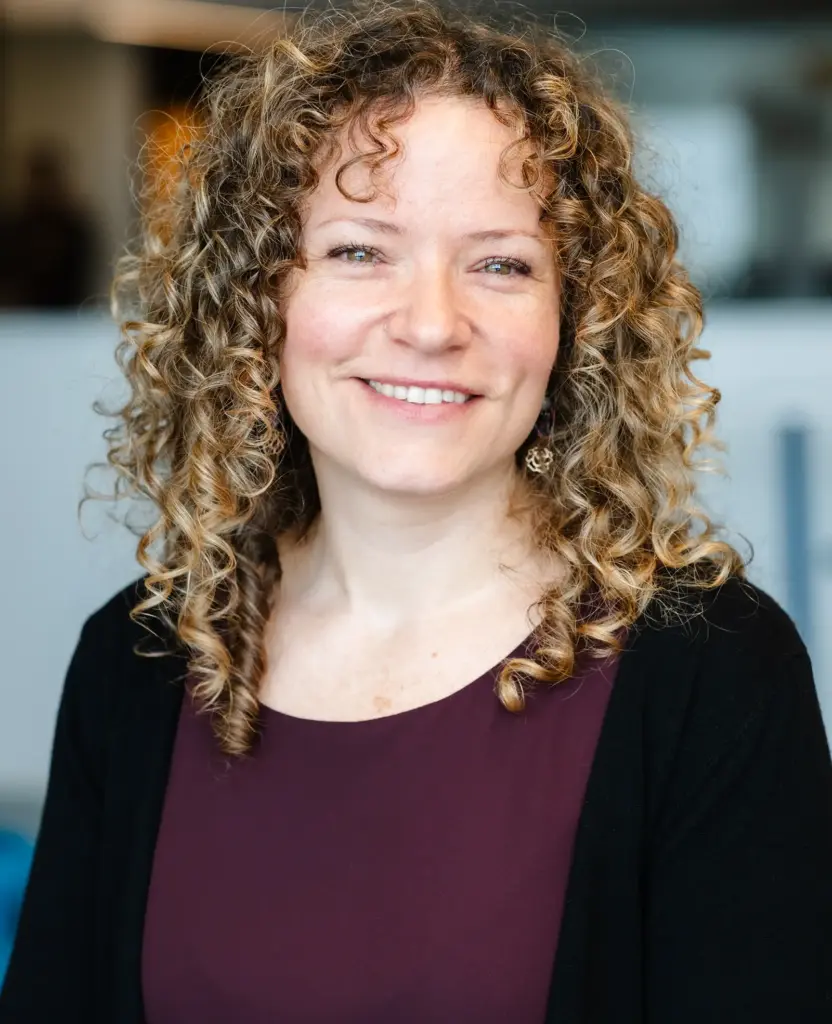
Amélie Proulx
Administrator
-
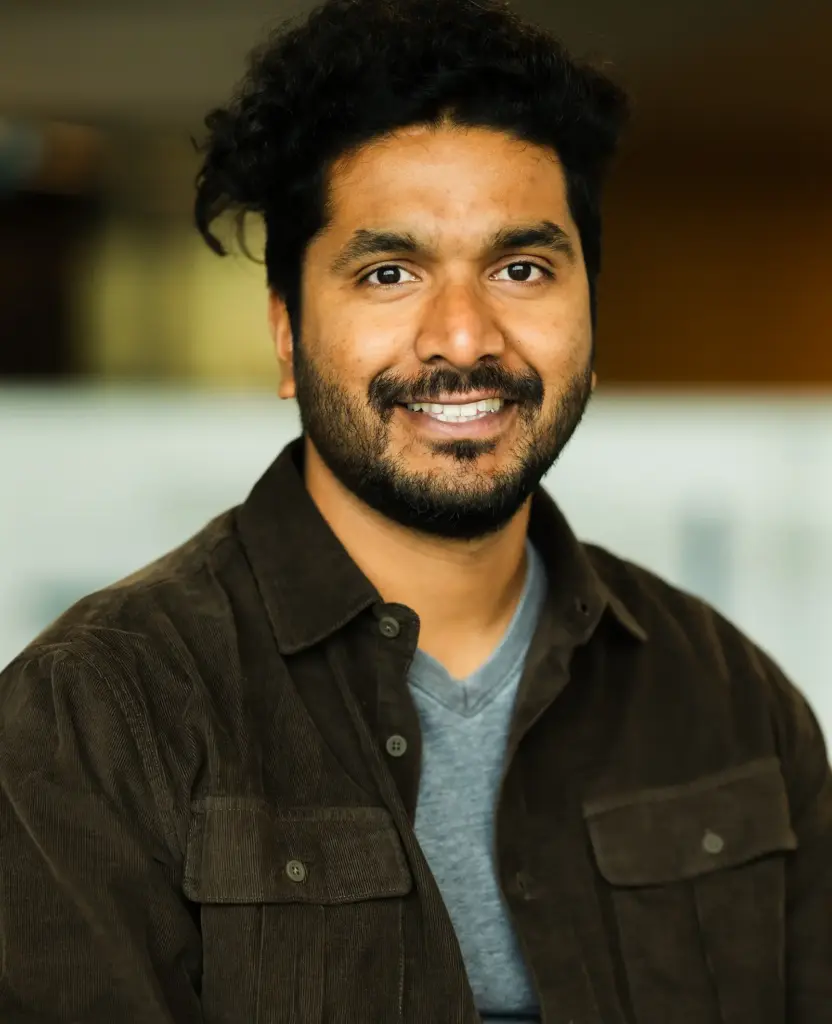
Sangeeth Das Kallullathil
Postdoctoral Researcher
-
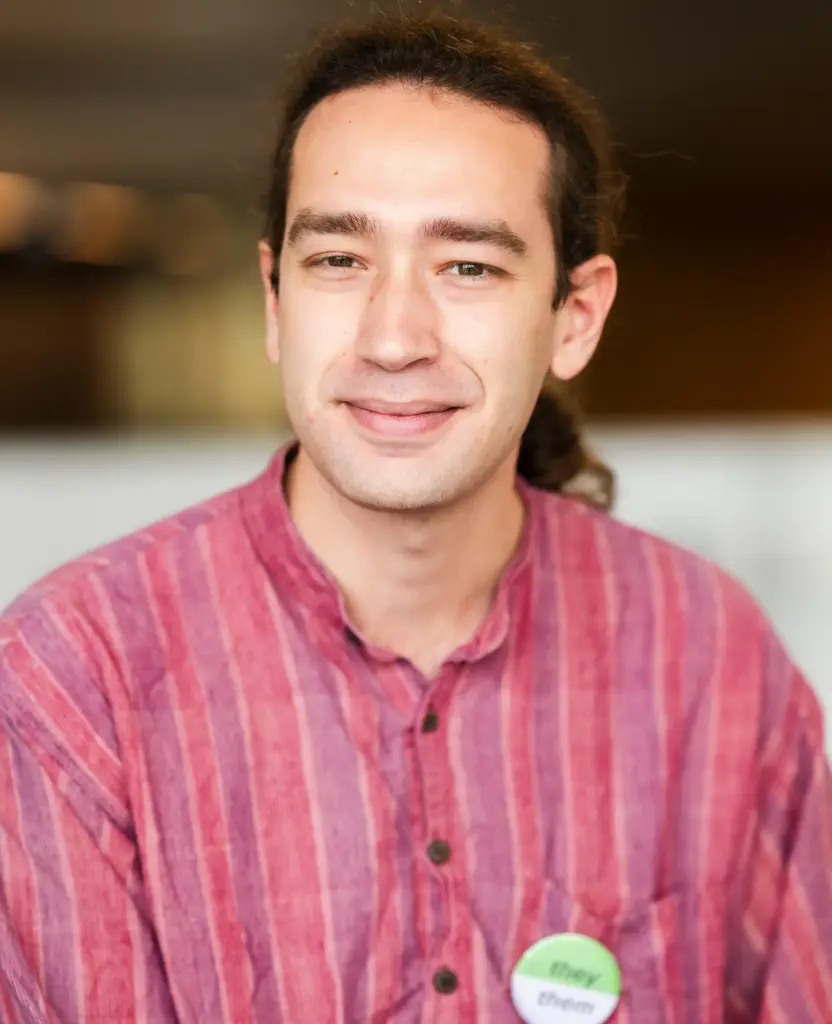
Benjamin Morrison
Postdoctoral Researcher
-
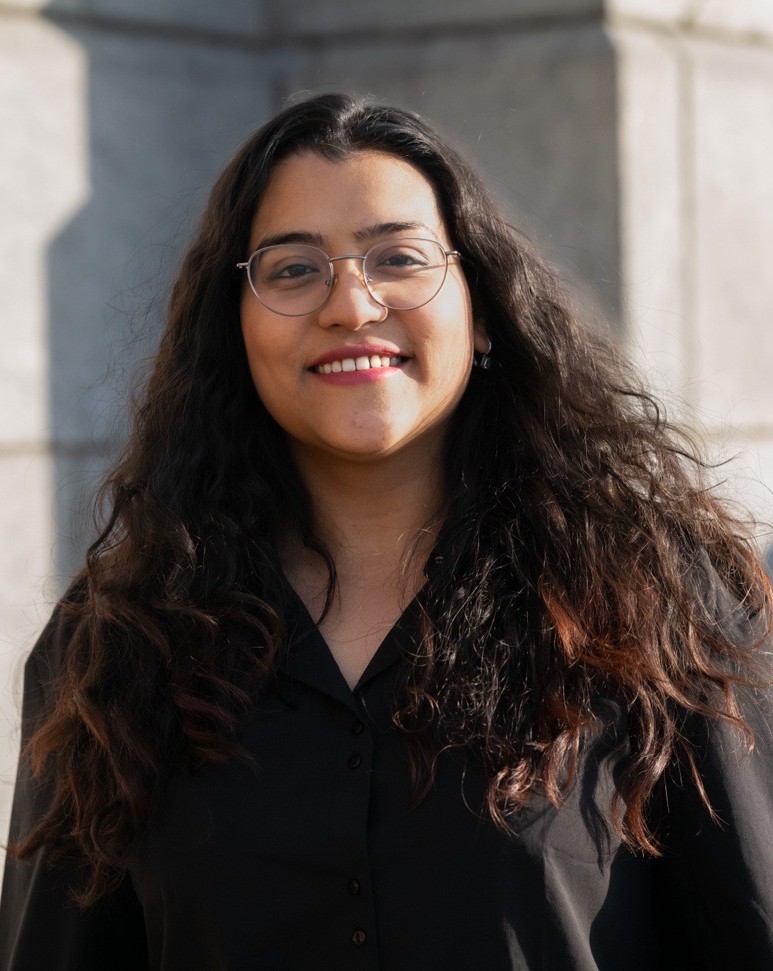
Ayana Sarkar
Postdoctoral Fellow
-
Muhammad Zubair
Postdoctoral Fellow
-
Aleksandr Berezutskii
PhD candidate
-
Julien Drapeau
PhD candidate
-
Joseph Gibson
PhD candidate
-
Jérémie Gince
PhD candidate
-
Martin Schnee
PhD candidate
-
Benjamin Lanthier
PhD student
-
Alexandre Leblanc
PhD student
-
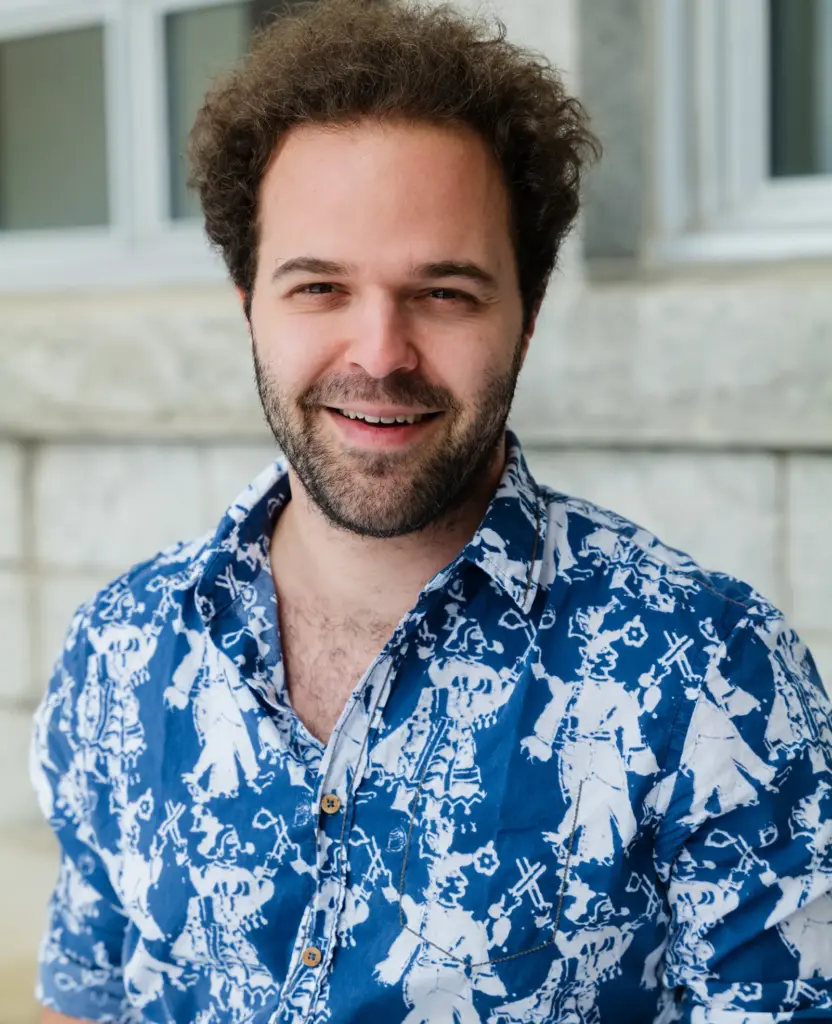
Isaac Christ Domchi Kanga
Master's Student
-
Shuka Haddadi
Master's student
Stefanos Kourtis
Associate Professor, Quantum Institute,
Université de Sherbrooke
Lead Researcher, Non Trivial
À propos de moi
Stefanos Kourtis is an Associate Professor in the Departments of Physics and Computer Science at Université de Sherbrooke, where he holds the Institutional Research Chair in Quantum AI. He is an Associate Member at Mila - Québec AI Institute and an IVADO Researcher. He previously held a Research Chair in Quantum Computation of the Ministère de l'Économie, de l'Innovation et de l'Énergie of Québec. He works at the nexus of quantum theory, quantum computation, and statistical physics. He earned his PhD from Dresden University of Technology in 2014 and completed postdoctoral scholarships at the University of Cambridge, Princeton University, and Boston University.
Victor Drouin-Touchette
Staff Researcher
Parcours académique
Postdoc in Quantum Computing at Rutgers University, supervised by Ananda Roy (2022-2023)
PhD in Theoretical Condensed Matter Physics at Rutgers University, supervised by Piers Coleman (2016-2022)
BSc in Mathematics and Physics at Université de Montréal (2013 – 2016)
Intérêts de recherche
Analog quantum computing and quantum simulation
Hybrid quantum-classical algorithms for optimization and operations research
Classical numerical methods for the simulation of quantum systems
Publications principales
Cédrick Perron, Yves Bérubé-Lauzière, and Victor Drouin-Touchette. "Leveraging Analog Neutral Atom Quantum Computers for Diversified Pricing in Hybrid Column Generation Frameworks." 2025. arXiv
Ayana Sarkar, Martin Schnee, Roya Radgohar, Mojde Fadaie, Victor Drouin-Touchette, and Stefanos Kourtis. "Concentration-Free Quantum Kernel Learning in the Rydberg Blockade." (2025). arXiv
Joseph Gibson, Victor Drouin-Touchette, and Stefanos Kourtis. "Quantum Counting in the Rydberg Blockade." (2025). arXiv
Prix et bourses
- University and Bevier Dissertation Fellowship (Rutgers University, 2022)
- Samuel Marateck Scholarship in Quantum Field Theory (Rutgers University, 2020)
- Doctoral and Masters Scholarship (Fonds de recherche du Québec en Nature et Technologie)
À propos de moi
My goal is to help define what can be implemented and verified on today’s quantum computers, and to use that knowledge to inform the design of near-term algorithms. I believe that hybrid quantum-classical approaches to practical tasks will only start to match (or outperform) purely classical frameworks if we take close inspiration from state-of-the-art classical methods; this leads naturally to interdisciplinary research. I am particularly fond of analog quantum computing approaches and am keeping a keen eye on digital-analog quantum computing frameworks.
Amélie Proulx
Administrator
Sangeeth Das Kallullathil
Postdoctoral Researcher
Benjamin Morrison
Postdoctoral Researcher
Parcours académique
- PhD in Physics at University of New Mexico, supervised by Andrew J. Landahl (2017-2025)
- MS in Physics at University of New Mexico, supervised by Andrew J. Landahl (2017-2019)
- BA in Mathematics and Physics at Reed College, supervised by Adam Groce and Darrel Schroeter (2013-2017)
Intérêts de recherche
Quantum information, computation, and simulation; in particular, error correction, architectures, development tools, and algorithms.
Publications principales
- Benjamin C. A. Morrison and Andrew J. Landahl. "Logical Majorana fermions for fault-tolerant quantum simulation," 2021. arXiv
- A. E. Russo, K. M. Rudinger, B. C. A. Morrison, and A. D. Baczewski. "Evaluating energy differences on a quantum computer with robust phase estimation," Phys. Rev. Letters 126.21 (2021), 210501. DOI
- B. C. A. Morrison, A. J. Landahl, D. S. Lobser, K. M. Rudinger, A. E. Russo, J. W. Van Der Wall, and P. Maunz. "Just Another Quantum Assembly Language (Jaqal)." 2020 IEEE International Conference on Quantum Computing and Engineering (QCE) (pp. 402–408). DOI
- Benjamin C. A. Morrison and Adam Groce. "Oracle separations between quantum and non-interactive zero-knowledge classes." Information Processing Letters 154 (2020): 105864. DOI
Prix et bourses
- James Borders Student Physics Fellowship at Reed College, 2015.
À propos de moi
I take a holistic and interdisciplinary approach to quantum computing, designing tools to support future quantum information systems from low-level control to application-focused algorithms. I want to use this approach to enable the scientific community to make the best possible use of new quantum hardware as it becomes available. I also hope to hone my skills as a mentor and teacher, so I can help share the joy of quantum computing with a broader audience.
Ayana Sarkar
Postdoctoral Fellow
Parcours académique
- Institut Quantique Postdoctoral Fellowship (May, 2023)
- PhD in Physics from the Shiv Nadar Institution of Eminence, Delhi-NCR, India supervised by Prof. Santosh Kumar (deceased) (2017-April, 2023)
- MSc (Physics) from the National Institute of Technology, Jamshedpur, Jharkhand, India supervised by Dr. Priyanka Maity (2015–2017)
- BSc (Hons) Physics at University of Calcutta (2012–2015)
Intérêts de recherche
- Quantum Machine Learning & Quantum Algorithms
- Quantum Many-Body Physics, Quantum Chaos & Quantum Information
- Random Matrix Theory
Publications principales
- Jérémie Gince, Jean Michel Pagé, Marco Armenta, Ayana Sarkar and Stefanos Kourtis, "Fermionic Machine Learning", 2024. DOI arXiv
- Ayana Sarkar, Martin Schnee, Roya Radgohar, Mojde Fadaie, Victor Drouin-Touchette, Stefanos Kourtis, “Concentration-Free Quantum Kernel Learning in the Rydberg Blockade” (under review). 2025. DOI arXiv
Prix et bourses
- Kourtis Lab Microgrant (2025)
- DST-INSPIRE Fellowship, National Fellowship from the Govt. Of India (2018-2023)
- DST-INSPIRE Scholarship, National Scholarship from the Govt. Of India (2012-2017)
- JBNSTS Scholarship (Jagadish Bose National Science Talent Search), West Bengal, India (2012)
À propos de moi
I am passionate about developing novel quantum algorithms, both in algorithm research and quantum machine learning, by leveraging insights from quantum many-body physics. I often draw on my background in quantum chaos and random matrix theory to study these systems in depth. My long-term goal is to apply hybrid knowledge of physics and quantum algorithms to address problems of broad societal importance. Alongside my research, I enjoy teaching and mentoring students, which I see as a deeply rewarding part of my work. Looking ahead, I also envision an entrepreneurial path, with the aspiration of founding a physics-driven artificial intelligence company.
Muhammad Zubair
Postdoctoral Fellow
Aleksandr Berezutskii
PhD candidate
Parcours académique
- MSc in Physics and Mathematics at Moscow Institute of Physics and Technology and Skolkovo Institute of Physics and Technology, supervised by Prof. Jacob Biamonte (2017–2019)
- BSc in Physics and Mathematics at Moscow Institute of Physics and Technology (2013–2017)
Intérêts de recherche
- Tensor Networks
- Quantum Error Correction
Publications principales
- Aleksandr Berezutskii. "mdopt: A code-agnostic tensor-network decoder for quantum error-correcting codes.", 2025. DOI
- Aleksandr Berezutskii, Minzhao Liu et al. "Tensor networks for quantum computing," 2025. DOI
- Aleksandr Berezutskii, Ilia Luchnikov, Aleksey Fedorov. "Simulating quantum circuits using the multi-scale entanglement renormalization ansatz.", 2025. DOI
- Alena Termanova, Artem Melnikov, Egor Mamenchikov, Nikita Belokonev, Sergey Dolgov, Aleksandr Berezutskii, Roman Ellerbrock, Christopher Mansell, Michael Perelshtein. "Tensor quantum programming.", 2024. DOI
Prix et bourses
- Unitary Foundation — Microgrant Winner (mdopt, 2023)
- QHack (IBM/Google challenge) — 2nd/1st place (2022)
- Université de Sherbrooke — Exemption Scholarship for International Students (2020)
À propos de moi
I am interested in the interplay of quantum computing and modern classical computational methods, such as tensor networks, differentiable programming and machine learning. I use these techniques to solve hard problems. Open-source software enthusiast.
Julien Drapeau
PhD candidate
Joseph Gibson
PhD candidate
Jérémie Gince
PhD candidate
Parcours académique
- MSc in Computational Neuroscience at Université Laval, supervised by Pr. Simon Hardy (2021-2023)
- BSc in Physics at Université Laval (2018-2021)
- Certificate in Computer Science at Université Laval (2018 – 2021)
Intérêts de recherche
- Quantum Machine Learning
- Quantum Circuit Simulation
- Computational Neuroscience
Publications principales
Prix et bourses
- UNIQUE Excellence Scholarship (2021)
- ESSOR EXFO Lamonde Scholarship (2021)
- Department of Computer Science Research Scholarship at Université Laval (2020)
- Marcel-Dessureault Scholarship at Université Laval (2018)
- Hydro-Québec Admission Excellence Scholarship at Université Laval (2018)
- FRQNT summer internship scholarship at Cégep de Sherbrooke (2017)
À propos de moi
I'm a multidisciplinary researcher working at the intersection of quantum machine learning, computational neuroscience, high-performance computing, physics, and computer science. I'm driven by a desire to push boundaries and turn seemingly intractable problems into tractable ones through clever algorithms and efficient computation.
Martin Schnee
PhD candidate
Parcours académique
- MSc in Quantum Physics at Université de Sherbrooke, supervised by Stefanos Kourtis (2020-2022)
- BSc in Physics at Université de Sherbrooke (2019)
Intérêts de recherche
- Quantum many-body dynamics
- Rydberg-atom quantum simulators
- Quantum scars
- Entanglement growth
- Tensor Network simulations
- Quantum Kernel Learning
Publications principales
- Ayana Sarkar, Martin Schnee, Roya Radgohar, Mojde Fadaie, Victor Drouin-Touchette, and Stefanos Kourtis. "Concentration-free kernel learning in the Rydberg blockade", 2025. arXiv
- Martin Schnee, Roya Radgohar, and Stefanos Kourtis. "Unconventional early-time relaxation in the Rydberg chain", 2024. arXiv
Prix et bourses
À propos de moi
My research aims to understand better the phenomenon of quantum many-body scarring arising Rydberg-atom simulators, which defies the natural tendency of complex systems to thermalize. For example: Are there specific features of this phenomenon that are easy to access in today’s experiments? What is the structure of quantum correlations that is building up as this phenomenon unfolds? With this understanding, I am interested in exploring whether we can leverage this exotic phenomenon as a ressource for some quantum computation. For example: can we use it to build quantum kernel algorithms for data classification which do not lose their performance as the quantum computer size is increased (as was usually the case so far)? I investigate these questions mainly using numerical tools involving exact diagonalization and tensor network methods to simulate quantum dynamics.
Benjamin Lanthier
PhD student
Parcours académique
- MSc in Physics at Université de Sherbrooke, supervised by Prof. Stefanos Kourtis (2022-2024)
- BEng in Engineering Physics at Polytechnique Montréal (2018-2022)
Intérêts de recherche
- Tensor networks
- Quantum error correction decoding algorithms
- Optimization and constraint satisfaction problems
Publications principales
Prix et bourses
- Undergraduate Student Research Awards - Undergrad (NSERC-USRA, 2021)
- FRQNT's supplements of the NSERC-USRA - Undergrad (2021)
À propos de moi
My work mainly focuses on advancing the theoretical and computational understanding of quantum error correction, with a particular focus on efficient decoding methods and numerical simulation of quantum error correction codes. My goal is to bridge the gap between theoretical concepts and the practical realization of robust error-corrected quantum computers.
Alexandre Leblanc
PhD student
Isaac Christ Domchi Kanga
Master's Student
Parcours académique
- MSc in Physics at University of Sherbrooke, supervised by Stefanos Kourtis (2025-2027)
- Engineering degree in Photonics, microelectronics and Quantum engineering at Grenoble INP PHELMA (2022-2024)
- Bachelor’s degree in physics at University of Yaoundé I (2017-2020)
Intérêts de recherche
- Quantum algorithms, particularly for optimization, Operational research and machine learning.
- Quantum computing applied to solve problems related to finance
À propos de moi
I am working on developing quantum computing applications related to optimization, operations research, and machine learning, with a particular focus on financial applications. Overall, I enjoy everything related to quantum physics, whether theoretical or experimental. I am also always eager to learn new things across different fields.
Shuka Haddadi
Master's student
Parcours académique
- BSc in Condensed Matter Physics, Shahid Beheshti University, Iran (2011–2016)
Intérêts de recherche
- Hybrid quantum-classical algorithms for combinatorial and #P-hard counting problems
- Noise resilience and mitigation in neutral atom quantum processors
- Quantum optimization and variational quantum algorithms
- Complex systems and their applications in social science
À propos de moi
I am passionate about advancing quantum computing through optimized hybrid quantum-classical methods and hardware-aware algorithm design. I am deeply interested in exploring complex systems, especially their fascinating intersections with social science. My goal is to innovate at the convergence of algorithm development and experimental platforms, making quantum technologies more robust and impactful for real-world challenges.
Former members
Carrying the mission beyond the group
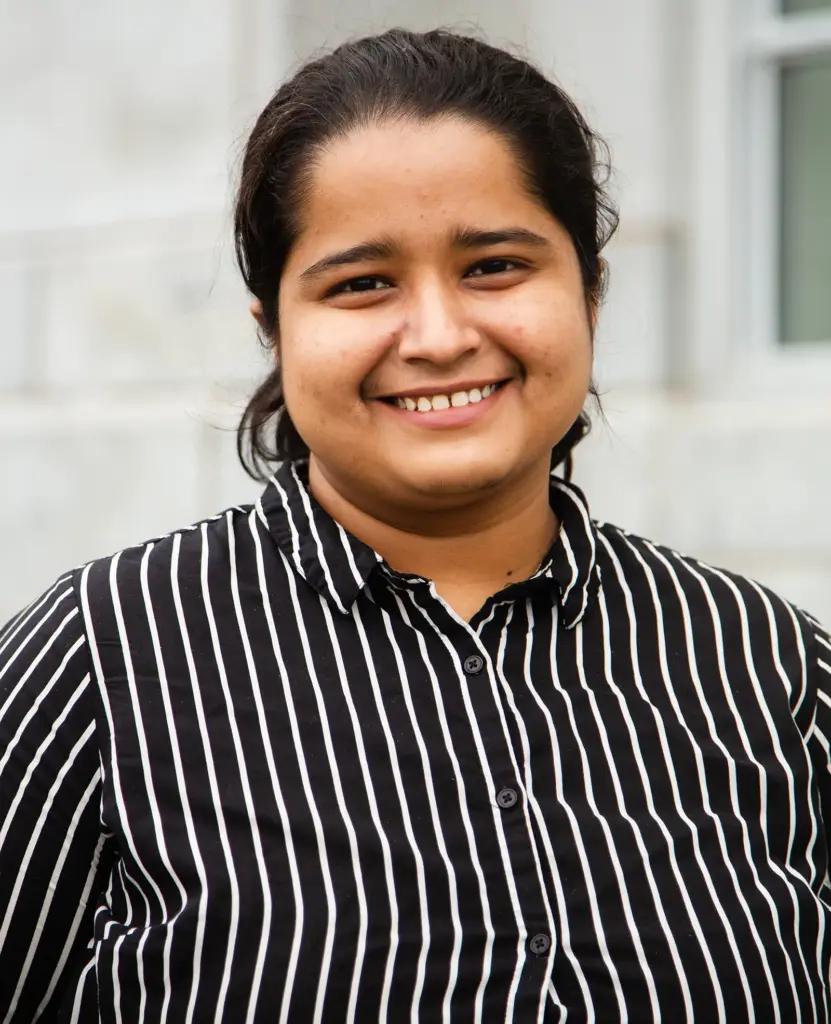
Shreya Banerjee, PhD
Postdoctoral Researcher
Jyoti Faujdar, PhD
Postdoctoral Researcher
Roya Radgohar, PhD
Postdoctoral Researcher
Tymoteusz Tula, PhD
Postdoctoral Researcher
Jeremy Côté, PhD
Graduate Student
Maxime Tremblay, PhD
Graduate Student
Nouédyn Baspin, MA
Graduate Student
Antoine Carrier, MA
Graduate Student
Omar Chikhar, MA
Graduate Student
Samuel Desrosiers, MA
Graduate Student
Join our group
As part of an experienced team, you will be able to choose projects that align with your interests in the field of quantum information science.
Studying within the group means securing a guaranteed scholarship, having the opportunity to undertake industry internships, and taking on teaching responsibilities only if desired. In addition, group members have the opportunity to participate in scientific activities, including international conferences.